If you’ve ever watched a Flamenco dancer strike the floor with lightning speed or seen a bullfighter move with grace in the ring, you’ve heard it. A deep, guttural cry that erupts from the crowd: Olé!
It’s the most famous word in the Spanish language, yet it’s often misunderstood. It’s not just a cheer like “hooray” or “bravo.” In Andalusia, the heartland of Flamenco, Olé is something much more spiritual.
The Mysterious Origins: From Arabia to Andalusia
Where does this magical word come from? While linguists still debate its roots, the most captivating theory takes us back over a thousand years to the time of Al-Andalus.
Many scholars believe Olé derives from the Arabic word for God: Allah (wa-Allah, meaning “By God”).
- When a performer reached a state of perfection that seemed superhuman, the audience wasn’t just praising the artist—they were praising the divine spark flowing through them.
- Other theories suggest it comes from the Greek Ololigi (a ritual cry) or the Bible’s Hallelu-yah.
Regardless of its etymology, in the dusty streets of Seville or the caves of Granada, Olé is a bridge between the earthly and the divine.
The “Duende”: When Olé Becomes Necessary and … What Does “Olé” Really Mean
In Andalusia, we don’t just say Olé because someone did a good job. We say it when we feel the Duende.
The Duende is a dark, elusive spirit that only appears when an artist breaks through their technical shell and performs with raw, bleeding soul. It is that moment when the hair on your arms stands up. In that split second, a simple “good job” isn’t enough. Your soul demands you shout: Olé!
Why You’ll Hear It on Our Tours
When you travel through Andalusia with us, you won’t just hear Olé in a theater. You’ll hear it:
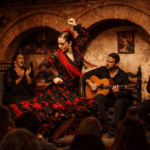
- At a “Tablao”: When the guitarist hits a chord that resonates in your chest.
- In a local “Peña”: Where locals gather for authentic, unpolished Flamenco.
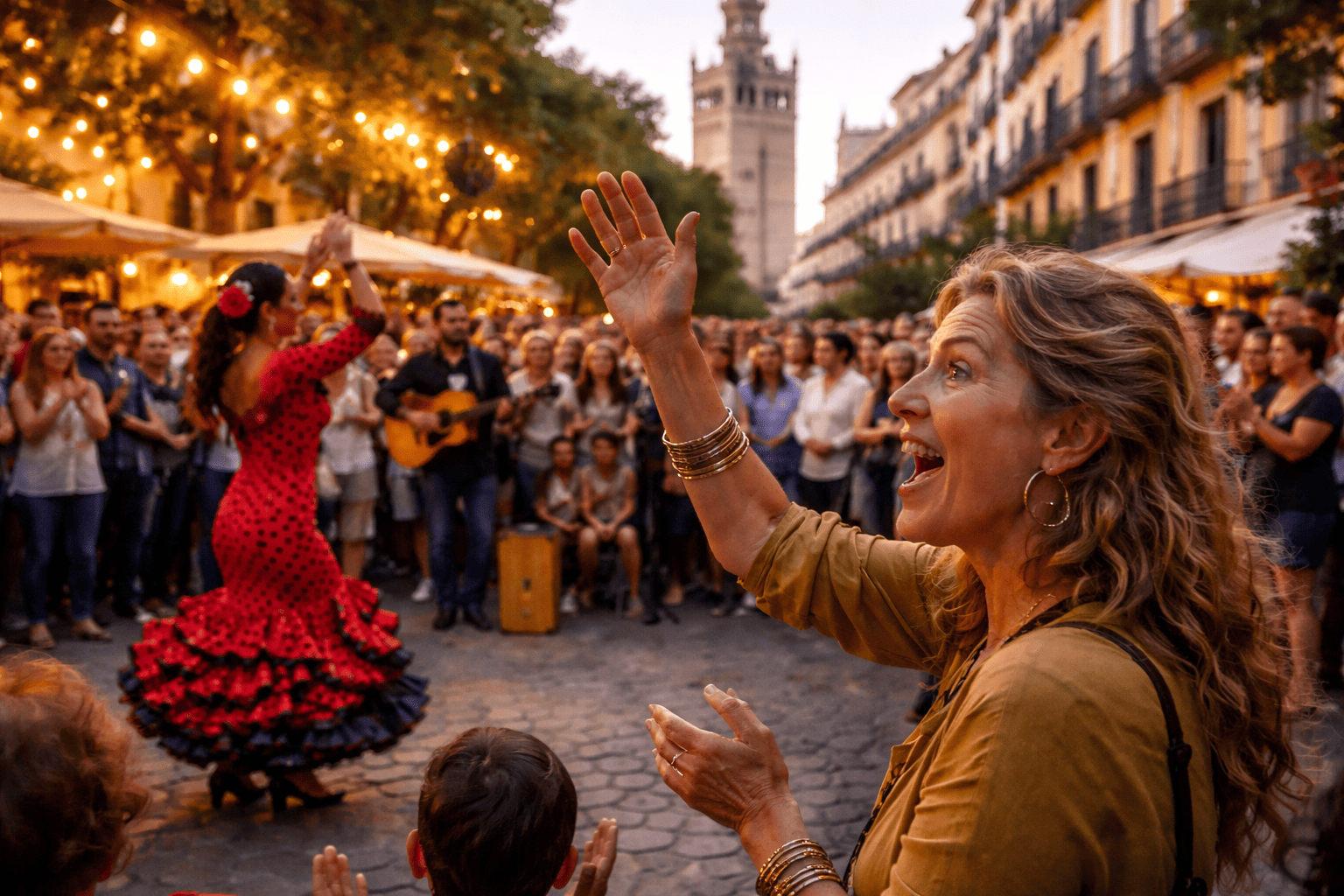
- In the streets: During our local festivals, where the joy of living (the alegría) is so thick you can almost touch it.
Experience the Magic for Yourself
You haven’t truly experienced Spain until you’ve felt the vibration of an Olé shared with a room full of strangers. It is the sound of passion, history, and the unmistakable spirit of the South.
Where to Practice Your “Olé” in Seville
If you’re wandering through the sun-drenched streets of Seville, you don’t have to wait for a formal show to feel the magic. The city is a living stage. Keep an eye (and an ear) out for these iconic spots:
- Plaza de España: Beneath the majestic bridges and tiled alcoves, you’ll often find incredible street performers. When a dancer’s heels blur in a frantic zapateado, don’t be shy—let out an Olé to show your appreciation!
- Jardines de Murillo: Nestled next to the Barrio Santa Cruz, these gardens are a favorite for local artists. There’s nothing quite like hearing the echo of a Flamenco guitar under the shade of the ancient giant ficus trees.
A Local Secret: It’s All About the Accent
Here is a tip that will make you sound like a true Sevillano: while the world knows the word as “Olé” (with the stress on the E), locals often use it differently in conversation.
When someone says something particularly witty, clever, or “spot on,” we use it as a mark of approval. But pay attention: in these cases, the stress shifts to the O.
It’s a short, sharp “Óle!” (pronounced OH-leh).
It’s the Andalusian way of saying “Bravo!” or “Well said!” It’s used for grace, for humor, and for those moments of everyday brilliance that happen over a glass of manzanilla wine and some tapas.
Visit Giraldatours and buy your experience in the most city of the world.